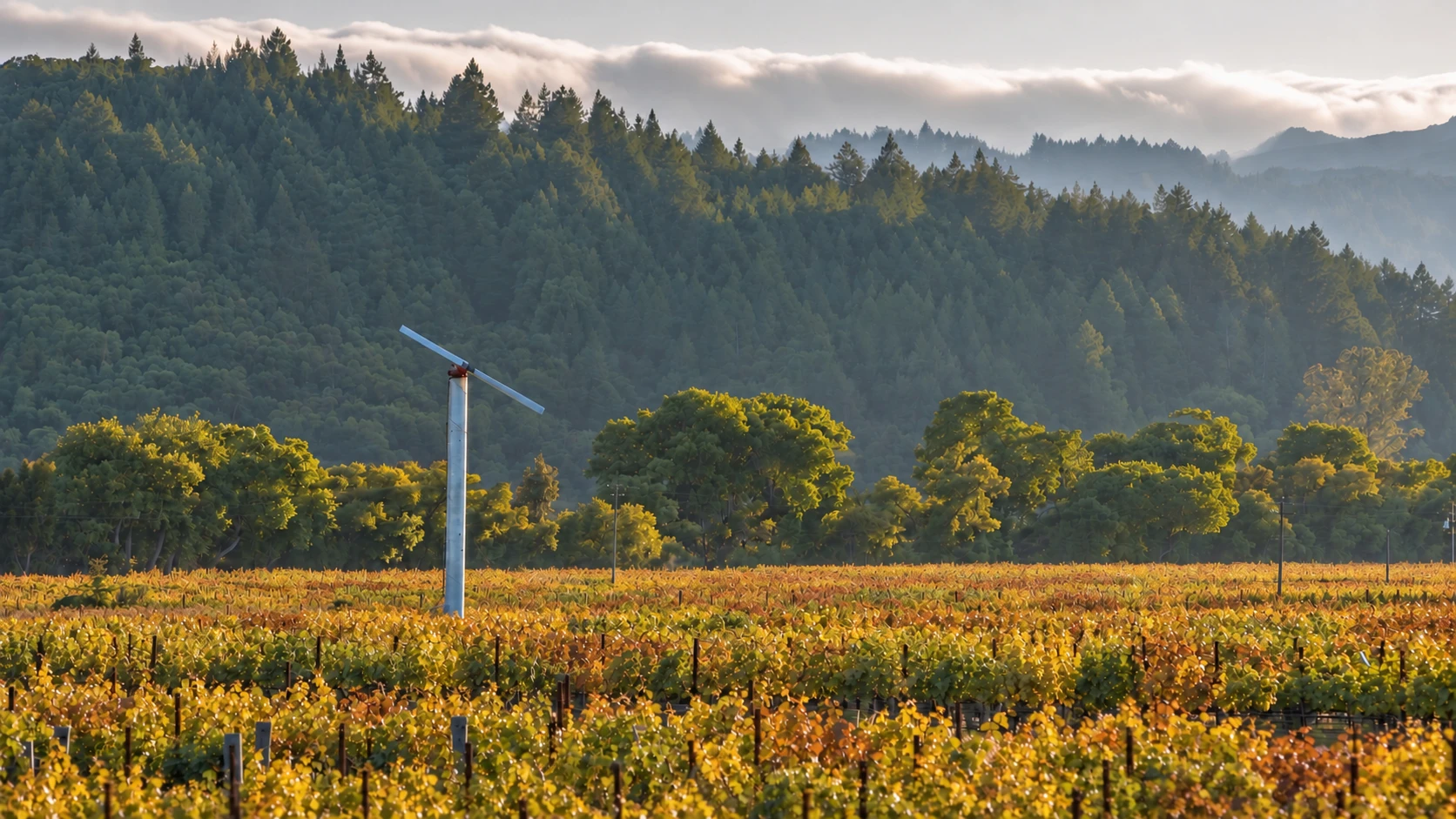
Harvest changes the light, rhythm, and working landscape around a Wine Country home. An autumn visit can reveal how architecture, acreage, privacy, and the practical details behind the view work together.
There is a particular moment in Wine Country when the landscape becomes impossible to treat as scenery. Vineyard rows are active, mornings have a purpose, and the late light moves across the hills a little earlier each day. A house that felt secluded in a summer photograph is suddenly part of a working place. That is one reason I like seeing a Sonoma or Napa property during harvest. The season is beautiful, certainly. It is also revealing. You learn how the house sits on its land, where you actually want to spend an evening, and how the surroundings feel when the valley is busy. Sonoma County's wine harvest typically runs from August through October. In Napa Valley, the timing varies by grape and site, often starting in early August and continuing into late October or beyond. There is no single harvest week that captures both counties. That variation is part of the reason to look closely at an individual property rather than relying on a seasonal postcard. Watch the light before you study the floor plan On a first visit, I pay attention to where the house opens to the outdoors. A terrace can look magnificent in a photograph and still be better suited to morning coffee than a long afternoon lunch. A western view may be the reason you came, but the experience of that view also depends on shade, glazing, the depth of the overhang, and where you can sit comfortably as the sun drops. Move through the home at a human pace. Stand in the kitchen and look toward the garden. Walk out to the pool or main terrace. Notice whether the interior rooms and outdoor spaces feel connected without making either one dependent on perfect weather. A good plan will give you options as the day changes. Autumn light helps make those choices visible. It can bring texture to stone, warm timber, and the edges of the hills. It can also show where a room needs a blind, a tree, or a different arrangement of furniture. Those small observations matter more to daily life than a wide-angle photograph can convey. Understand the landscape you would own There is a meaningful difference between a home with a vineyard view, a parcel with planted vines, and an estate whose acreage supports an ongoing agricultural operation. The photographs may look similar. The responsibilities do not. If the land is a substantial part of the attraction, ask for a clear parcel map and a plain description of what is included in the sale. Who farms the vines? Is there a lease or management agreement? Where are the access routes, utility lines, fences, and easements? How much of the acreage is usable for the purpose you have in mind? A view across someone else's vines is still a wonderful view, but it should be understood on its own terms. Harvest can make those questions easier to frame. You may see the route equipment uses, the distance between the residence and active rows, and how a property's privacy holds up during the busiest part of the growing year. A visit at a different time of day is often worthwhile. Look beyond the season's beauty Some of the most consequential details of a country property will never appear in its hero image. A private well, an onsite wastewater system, a guest structure, or an ambitious future project each deserves its own review. The right questions depend on the parcel and on what you intend to do there. For an unincorporated Sonoma County property, Permit Sonoma's record search is a useful starting point for building, planning, well, and septic records. Napa County's public records search likewise includes building, planning, well, and onsite wastewater records; the county cautions that digitized results may be incomplete. Records should be paired with the seller's documents and the appropriate inspections. If a future guest house, vineyard use, or renovation is central to your plans, confirm feasibility with the relevant agency and qualified specialists before treating it as part of the property's value. Insurance belongs in that early conversation too. Seek a quote for the actual address and intended use while there is still time to evaluate the result. The California Department of Insurance recommends comparing coverage options. For properties exposed to wildfire, CAL FIRE's guidance on defensible space and home hardening offers a useful way to inspect the setting and the building together. Neither the appearance of a home nor a prior owner's policy is a substitute for a current quote. Let the house tell you how it wants to be lived in The most memorable Wine Country homes have a sense of proportion. They make room for company without requiring a large gathering to feel complete. They give you a place to be outside when the air cools. They allow the landscape into everyday routines without asking you to spend every hour tending it. That balance is personal. For one buyer, it may mean an architectural home with a private guest suite and a terrace that catches the last light. For another, it is a modest residence on more land, with the freedom to garden, walk, or simply leave space untouched. Harvest helps clarify which details create pleasure for you and which ones would become obligations. Before you decide, return to the property with a different question in mind. Ask how the access works after rain, what the outdoor spaces feel like in summer heat, and which rooms you would use on an ordinary Tuesday. Bring the beauty of the season into the decision, then make sure the home still makes sense when harvest is over. If you are considering a home, vineyard property, or rural estate in Sonoma Valley or Napa Valley, I can help you compare locations and assemble the right questions for each property. A thoughtful search should leave you with a clear understanding of both the place and the life it can support. Distribution copy LinkedIn post: Harvest is one of the best times to understand a Wine Country property. The light is changing, the land is active, and details that disappear in listing photographs become easier to see. I wrote about what I look for when touring Sonoma and Napa homes this time of year, from terraces and vineyard activity to wells, permits, and insurance. Read the new article on my site: